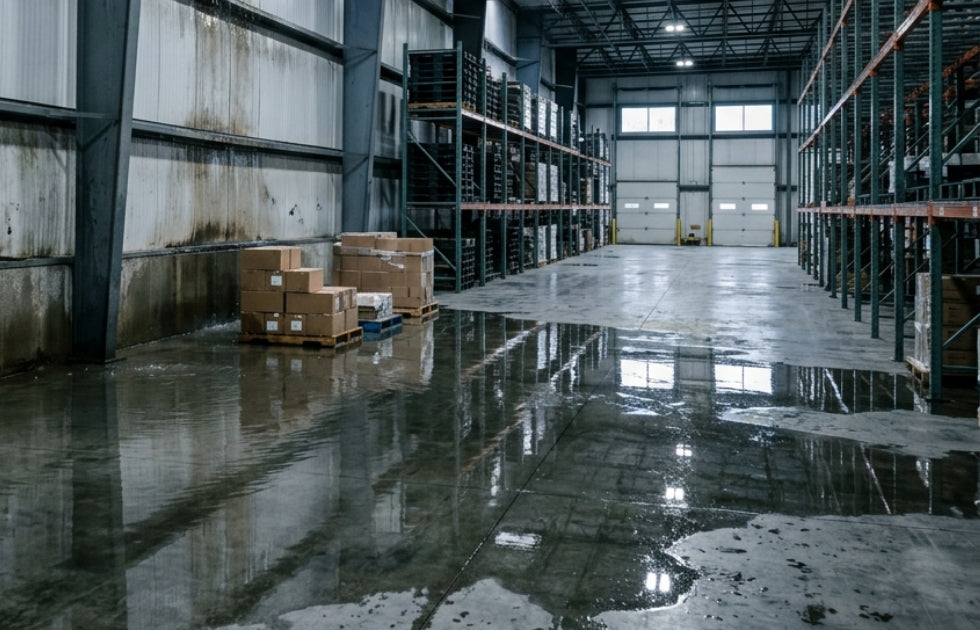
The rain stopped. The water came in anyway.
Whether it was a roof leak, a drain that couldn't keep up, water pushing under a door, or a window that lost the argument with a storm, the result is the same. You have a commercial space with more moisture in it than there should be, and a clock ticking on how long you have before that moisture becomes a bigger problem than the water itself.
Drying out a commercial space after heavy rain isn't complicated, but it does need to happen quickly and in the right order. Here's what to do.

Quick Answer: How Do You Dry Out a Commercial Space After Heavy Rain?
Start by addressing safety and stopping any active water intrusion before anything else. Remove standing water as quickly as possible, then move on to drying the air and materials in the space. Commercial dehumidifiers are the most effective tool for pulling moisture out of the air and accelerating the drying of walls, flooring, and structural materials. The faster moisture is removed, the lower the risk of mold growth, structural damage, and extended operational downtime. In most commercial spaces, active drying should begin within 24 to 48 hours of water intrusion.
First Steps: What to Do Before You Start Drying
Before any equipment goes on and any drying begins, a few things need to happen first. Skipping these steps doesn't speed up the process. It creates new problems on top of the existing one.
-
Confirm the space is safe to enter.
Water and electricity are the first concern. If there is any possibility that water has reached electrical panels, outlets, or equipment, do not enter the space until a licensed electrician has confirmed it is safe. This is not a step to shortcut.
-
Stop the source if it is still active.
A dehumidifier running in a space that is still taking on water is fighting a losing battle. Before drying begins, identify where the water came in and address it as much as possible. Tarps over a damaged roof section, sandbags at a doorway, or simply closing off the affected area from ongoing intrusion buys the drying process the conditions it needs to work.
-
Document the damage before cleanup starts.
Photograph and video the affected area thoroughly before moving anything or starting equipment. Insurance claims require documentation of conditions as they were found, not after cleanup has begun. Take five minutes to do this before touching anything.
-
Remove standing water first.
Dehumidifiers remove moisture from the air. They are not designed to handle standing water. Wet vacuums, pumps, and mops handle standing water. Get the visible water out first, then bring in the dehumidifiers to handle what remains in the air and materials.
-
Remove saturated materials that cannot be dried.
Wet cardboard, saturated insulation, and soaked ceiling tiles are not salvageable in most cases and actively hold moisture in the space. Removing them early reduces the overall moisture load and gives the drying equipment better conditions to work in.
How to Dry Out a Commercial Space Effectively
Once the space is safe, the source is controlled, and standing water is gone, move through these steps in order. Speed matters. Mold can begin developing within 24 to 48 hours of water intrusion.
-
Check outdoor conditions before ventilating.
If outdoor humidity is lower than indoors, open doors and windows to move moist air out. If outdoor air is humid, keep the space sealed and let the dehumidifiers do the work.
-
Remove saturated materials.
Wet cardboard, soaked insulation, and saturated ceiling tiles hold moisture and slow the drying process. Get them out early.
-
Position dehumidifiers across the affected area.
Direct airflow across wet surfaces and along walls rather than into the center of the room. Multiple units staged across the space dry faster and more evenly than one large unit running from a single position.
-
Direct airflow at wet surfaces.
Water migrates into concrete, drywall, and flooring. Airflow needs to reach those surfaces directly, not just circulate through the middle of the room.
-
Monitor humidity continuously.
Use a commercial hygrometer to track progress. Target relative humidity below 50% before considering the space dry.
-
Check wall cavities and hidden spaces.
Moisture moves into wall cavities, under flooring, and above drop ceilings. If walls feel soft or show discoloration above the waterline, moisture has likely migrated inside and may need professional assessment.
How Commercial Dehumidifiers Help in Storm Recovery
Ventilation moves air. A commercial dehumidifier removes moisture from it entirely. In a post-rain recovery situation that distinction matters.
-
High CFM output
Means they pull large volumes of air through the system per minute, covering a large affected space effectively.
-
High daily capacity
Means substantially more moisture removed per day than a residential unit can manage under the same conditions.
-
Continuous duty construction
Means they run hard for days without interruption, which is exactly what post-storm recovery demands.
-
Strategic placement multiplies effectiveness.
Multiple units staged across the affected area outperform one large unit running from a single location.
-
Size up for recovery situations.
The moisture load after water intrusion is higher than routine maintenance. Size for the conditions, not just the square footage.
How Long Does It Take to Dry Out a Commercial Space?
Every situation is different, but here are general benchmarks to work from.
| Condition | Estimated Drying Time |
|---|---|
| Minor moisture, hard surfaces only | 24 to 48 hours |
| Moderate intrusion, some material absorption | 3 to 5 days |
| Significant intrusion, wall and flooring absorption | 5 to 7 days |
| Severe intrusion, structural materials affected | 7 to 14 days or longer |
A few factors that affect the timeline:
- How quickly drying began. Every hour of delay adds to the moisture load materials have absorbed.
- How many dehumidifiers are running and how well they're positioned. Capacity and placement both affect speed.
- How much material absorbed water. Hard sealed surfaces dry faster than concrete, drywall, and wood framing.
- Outdoor conditions. High outdoor humidity slows the process even with equipment running.
When to Call a Professional Restoration Service
Commercial dehumidifiers handle the moisture. They don't assess structural damage, test for mold, or make decisions about what needs to be replaced versus dried. Know when the situation calls for professional help.
Call a restoration professional if:
- Water intrusion was significant and affected structural materials
- Walls feel soft, sound hollow, or show discoloration beyond the waterline
- The musty smell persists after several days of active drying
- Mold is visible anywhere in the affected area
- The space has been wet for more than 48 hours before drying began
- Flooring, drywall, or insulation shows signs of saturation that surface drying won't reach
Starting with commercial dehumidifiers is the right call in most post-rain situations. Knowing when to bring in additional help is what keeps a manageable cleanup from becoming a larger problem.
Drying Checklist: Commercial Space After Heavy Rain
A quick reference to work from when water gets in.
Before you start drying
- Confirm space is safe to enter, electricity checked
- Active water source identified and controlled
- Damage documented with photos and video
- Standing water removed with wet vac or pump
- Unsalvageable saturated materials removed
During the drying process
- Outdoor humidity checked before ventilating
- Commercial dehumidifiers positioned across affected area
- Airflow directed at wet walls, floors, and surfaces
- Humidity levels monitored with a hygrometer
- Wall cavities and hidden spaces checked for moisture migration
- Dehumidifier tanks drained or continuous drainage confirmed
Signs the space is dry
- Relative humidity consistently below 50%
- No musty odor remaining
- Surfaces feel dry to the touch
- No visible condensation on walls, pipes, or floors
- Materials that absorbed water feel firm and dry
Get the Moisture Out Before It Becomes a Bigger Problem
Water intrusion is a problem. Moisture left behind after water intrusion is a worse one.
Commercial dehumidifiers are the most effective tool available for getting a commercial space dry quickly after heavy rain. The right capacity, positioned correctly, running continuously from the start gives you the best chance of a fast recovery with minimal secondary damage.
Ready to get your space dry?
Browse our selection of commercial dehumidifiers to find the right unit for your space and your situation.
Shop Commercial Dehumidifiers