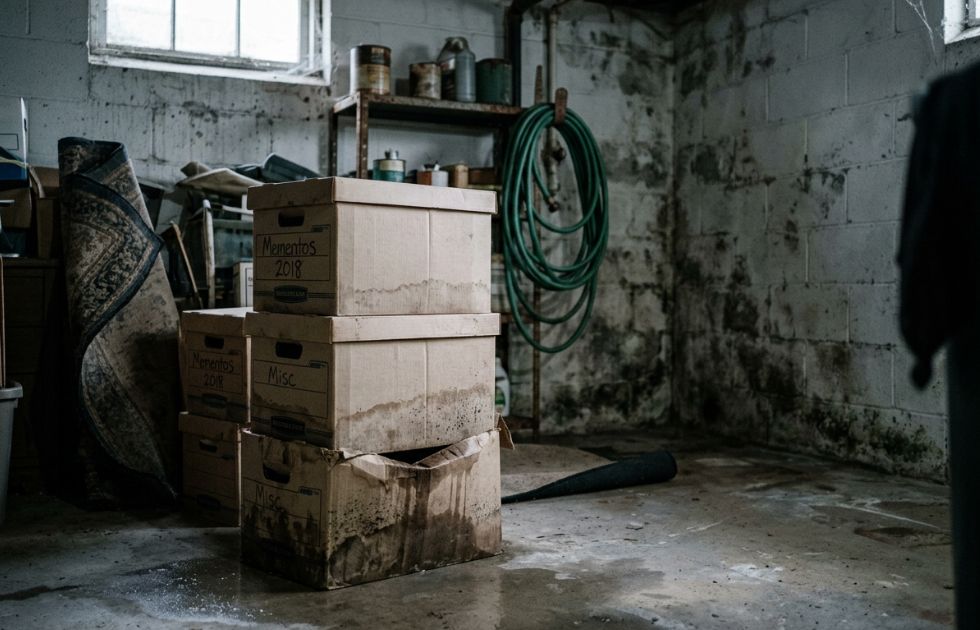
Basements don't announce their problems. They just quietly get worse until the smell reaches the first floor or the storage boxes start feeling soft.
Excess moisture is the most common basement problem homeowners deal with, and it's one of the easier ones to address once you know it's there. The tricky part is that the signs are easy to overlook, especially in a space you don't spend much time in.
Here's what to look for.
The most common signs are a persistent musty smell, visible condensation on walls or pipes, water stains or efflorescence on concrete, soft or warped storage items, and peeling paint or wallboard. Humidity levels consistently above 60% in a basement are a reliable indicator that moisture is accumulating faster than the space can handle on its own. A dehumidifier is the most direct solution for bringing basement humidity under control.
1. It Smells Musty Even When It's Dry
The musty smell is usually the first thing people notice, and it's one of the most reliable indicators of excess moisture.
That smell comes from mold and mildew growth, both of which thrive in humid environments. You don't need visible mold to have a moisture problem. Mold can grow behind drywall, under flooring, and in the corners of a basement that never quite dries out. If the smell is there, the moisture usually is too.
2. The Walls Feel Damp or Look Discolored
Run your hand along the basement wall. If it feels cool and slightly wet rather than just cool, that's moisture migrating through the concrete or block.
Discoloration on basement walls, whether dark streaks, white powdery deposits, or a general grayish tinge, is another indicator. That white powdery residue in particular, called efflorescence, is mineral deposits left behind when water moves through concrete and evaporates on the surface. It's a sign that water is actively moving through the wall.
3. You Can See Condensation on Pipes or Surfaces
Pipes sweating in a basement is a common sight that's easy to write off as normal. It's not nothing.
Condensation forms when a cool surface meets warm humid air. In a basement with excess moisture, pipes, windows, and even concrete floors can develop visible condensation. It's the same principle as a cold glass sweating on a summer day. The air is holding more moisture than the surfaces around it can stay dry against.
4. The Humidity Reading Is Consistently Above 60%
If you have a hygrometer or a smart thermostat that tracks humidity, the number tells you directly what the air is holding.
Basements naturally run more humid than the rest of the house, but consistently reading above 60% relative humidity is a sign the space needs active moisture control. The target range for most basements is between 30% and 50%. Above 60% creates conditions where mold grows readily, wood deteriorates, and stored items take on damage over time.
An inexpensive hygrometer is worth keeping in a basement year-round if you want an honest read on what's happening down there.
5. Storage Items Are Warping, Softening, or Growing Mold
Cardboard boxes that feel soft or smell off. Wooden furniture that's warping at the joints. Books or paper items that have wavy pages or visible spotting. Fabric items that feel damp or smell musty even after being stored clean.
These are all signs that the ambient humidity in the space is high enough to affect stored materials over time. A basement that does real damage to what you store in it is a basement with a moisture problem worth addressing.
6. Paint or Wallboard Is Peeling or Bubbling
Finished basements show moisture problems differently than unfinished ones. Paint that bubbles, peels, or separates from the wall is a sign that moisture is working its way through from behind. Drywall that feels soft, looks stained, or has visible surface mold is further along the same problem.
In a finished basement this can be easy to miss until the damage is significant. If paint is peeling in a basement that doesn't have obvious plumbing issues, moisture in the air or moving through the wall is the likely cause.
7. The Floor Feels Damp or Has Visible Moisture
Concrete basement floors can sweat just like walls and pipes do. If the floor feels damp underfoot, shows dark wet patches, or has moisture visible after being wiped dry, the concrete is either absorbing groundwater from below or condensing moisture from humid air above.
Finished floors tell the same story differently. Tile that feels clammy, laminate that's lifting at the seams, or carpet that smells musty are all signs of moisture working its way up from or through the slab.
8. You've Noticed an Increase in Pests
Moisture attracts insects. Silverfish, centipedes, earwigs, and certain types of beetles are drawn to damp environments and show up in basements with elevated humidity more often than dry ones.
A sudden increase in basement pest activity isn't always a moisture problem, but it's worth checking humidity levels when it happens. Addressing the moisture often reduces pest activity without any other intervention.
9. Wood Framing, Joists, or Trim Shows Signs of Deterioration
Wooden structural elements in a basement, floor joists, support beams, window trim, and stair stringers, are particularly vulnerable to sustained high humidity. Wood that's darkening, feels soft when pressed, or shows visible surface mold is absorbing more moisture than it should on a consistent basis.
This is the sign that warrants the most urgency. Surface mold on a concrete wall is a nuisance. Deteriorating structural wood is a problem that gets more expensive the longer it goes unaddressed.
10. The Rest of the House Feels More Humid Near the Basement
Moisture doesn't stay in the basement. It moves upward through the home through a process called the stack effect, where air rises from lower levels to upper ones carrying humidity with it.
If the first floor feels noticeably more humid near the basement door, or if rooms above the basement run consistently stickier than the rest of the house, the basement moisture level may be contributing to whole-home comfort problems. Addressing humidity at the source, in the basement, often improves comfort on the floors above it as well.
What To Do If Your Basement Shows These Signs
The good news is that most basement moisture problems respond well to a straightforward solution. If the moisture is coming from inside the air rather than actively leaking through walls or up through the floor, a dehumidifier is the most direct tool available.
A dehumidifier pulls moisture out of the basement air continuously, maintains a target humidity level, and prevents the conditions that lead to mold growth, structural deterioration, and the steady damage to everything stored down there. It doesn't fix an active water intrusion problem, a cracked foundation, or a drainage issue around the home's perimeter. Those need their own solutions. But for the chronic ambient humidity that affects most basements, it's the right starting point.
A few things to set up correctly:
- Get the sizing right. Basements are often the dampest space in a home and need more dehumidification capacity than their square footage alone suggests. If the space runs consistently damp or shows multiple signs from the list above, size up from the baseline recommendation rather than meeting it exactly. Our earlier guide on dehumidifier sizing covers the capacity ranges by room size and humidity level in detail.
- Use continuous drainage if possible. Most dehumidifiers include a drain hose connection that allows continuous drainage to a floor drain. In a basement running significant moisture, a collection tank fills up faster than most people expect. Continuous drainage keeps the unit running without interruption.
- Run it consistently. A dehumidifier works best as a continuous presence rather than an occasional one. Set it to maintain a target humidity between 30% and 50% and let it run. Turning it on only when things feel damp means the space has already accumulated more moisture than it should before the unit kicks in.
- Check the signs periodically. Once a dehumidifier is running and humidity is under control, the signs on this list should improve noticeably over time. Musty smells fade, condensation clears up, and stored items stop taking on damage. If the signs persist despite running a properly sized unit, an active water intrusion issue may be contributing and is worth investigating further.
Some dehumidifiers include a built-in pump that will allow you to eject the collected water into a sink or tub when floor drains aren't an option.
Don't Wait for the Smell to Reach the First Floor
By the time a basement moisture problem is obvious, it's usually been building for a while. The signs are easier to catch early than the damage is to reverse later.
If your basement is showing one or two items from this list, it's worth addressing now. If it's showing five or six, a dehumidifier should probably already be running down there.