When temperatures start creeping up, most people realize the same thing at the same time.
Their cooling system isn’t ready for summer.
Maybe one room never gets comfortable. Maybe the old window unit barely keeps up. Or maybe you’re tired of dragging a portable AC from room to room every year.
The good news is you have options.
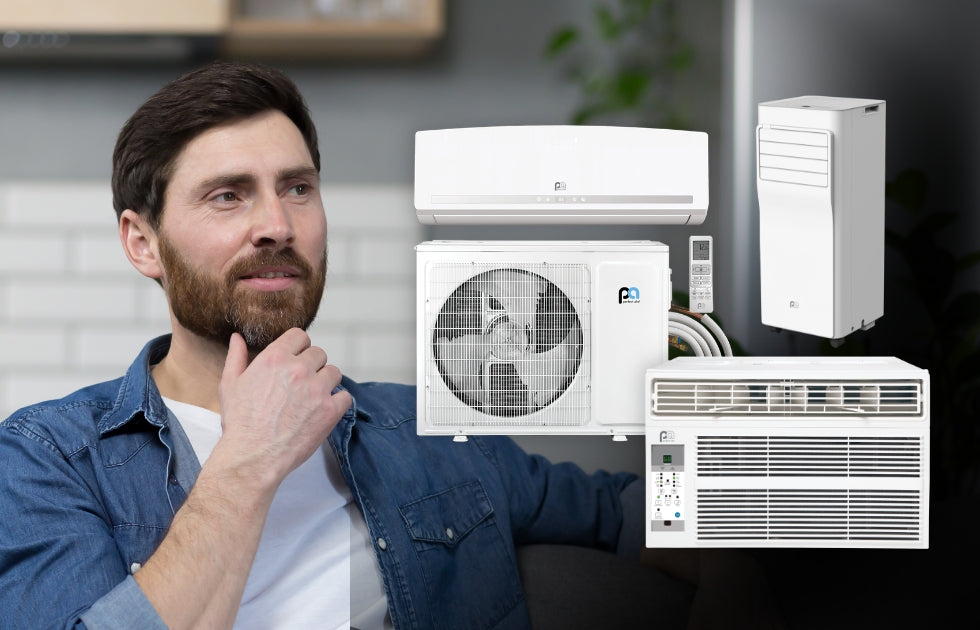
Window air conditioners, portable units, and modern ductless mini-split systems can all solve cooling problems. Many homeowners start by asking the same question: Is a mini-split better than a window AC, and how does a portable air conditioner compare? The right choice depends on your space, your budget, and how permanent of a solution you want.
Let’s break down how each system works and when one makes more sense than the others.

Which Is Better: Mini-Split, Window AC, or Portable AC?
The best cooling option depends on your situation. Window air conditioners are usually the most affordable and work well for small rooms. Portable AC units offer flexibility when window installation isn’t possible. Mini-split systems provide the most efficient and permanent solution, delivering strong cooling without blocking a window.
The best choice depends on how long you plan to use the system, how much space you need to cool, and how much installation you're comfortable with. Mini-splits are often the best long-term choice for comfort and efficiency, while window and portable units are typically better for temporary or budget-friendly cooling.
Quick Comparison: Mini-Split vs Window AC vs Portable AC
|
Feature
|
Mini-Split System
|
Window AC
|
Portable AC
|
|
Installation
|
Permanent installation with indoor and outdoor unit
|
Installed in window frame
|
No permanent install, vent through window
|
|
Cooling Power
|
Excellent for consistent room cooling
|
Good for small to medium rooms
|
Moderate cooling for smaller spaces
|
|
Energy Efficiency
|
Very high efficiency
|
Moderate efficiency
|
Lower efficiency
|
|
Noise Level
|
Very quiet indoors
|
Moderate noise
|
Usually the loudest option
|
|
Window Access
|
Windows remain fully usable
|
Blocks part of the window
|
Uses a vent hose but window remains mostly usable
|
|
Best For
|
Long-term room comfort, additions, garages, older homes
|
Budget cooling for bedrooms or apartments
|
Temporary cooling or rooms without window access
|

Window Air Conditioners: Simple and Affordable Cooling
Window air conditioners have been cooling homes for decades, and for good reason. They’re affordable, widely available, and relatively easy to install.
Most window units sit in a standard window frame and pull warm air from the room, cool it, and push the heat outside through the back of the unit. For a single bedroom, office, or small apartment, a window AC can be a simple way to stay comfortable during hot weather.
They’re also one of the lowest upfront-cost cooling options, which makes them popular for renters or homeowners who need a quick seasonal solution.
That said, window units do come with a few tradeoffs.
They block part of the window, they’re usually louder than other cooling options, and they typically cool one room at a time. Larger homes often need multiple units to stay comfortable.
Window ACs work best when:
- You need affordable cooling for a single room
- You’re cooling a small space like a bedroom or office
- You want a temporary or seasonal solution
- Installing a permanent system isn’t practical
For many people, a window AC is the easiest way to get through a hot summer. But if you’re looking for more flexibility or don’t want to sacrifice a window, another option might make more sense.

Portable Air Conditioners: Flexible Cooling Without Permanent Installation
Portable air conditioners are designed for situations where installing a window unit isn’t practical. Instead of mounting in the window, the unit sits on the floor and vents hot air outside through a hose connected to a window kit.
Setup is usually straightforward. Most portable AC units simply require placing the exhaust hose in a window bracket and plugging the unit into a standard outlet.
This makes them a popular option for apartments, rentals, and temporary cooling situations.
Portable units are also helpful for renters who aren’t allowed to install window air conditioners. Since the unit isn’t mounted permanently in the window frame, it can often meet building restrictions while still providing cooling.
Another advantage is flexibility. Portable air conditioners can be moved from room to room if needed, which can help when you only need cooling in certain spaces during the day.
However, portable units do have limitations.
They tend to be louder than other cooling systems, and because the entire unit sits inside the room, they’re usually less energy efficient than window ACs or mini-splits. Most models are best suited for smaller spaces rather than large living areas.
Portable ACs work best when:
- You’re renting and can’t install a window unit
- You need temporary cooling
- You want the ability to move the unit between rooms
- Your space doesn’t allow permanent installation
For flexible, short-term cooling, a portable AC can get the job done. But if you’re looking for quieter operation and more consistent comfort, there may be a better long-term solution.

Mini-Split Systems: Powerful Cooling Without the Window Unit Tradeoffs
Mini-split systems take a different approach to cooling a space.
Instead of sitting in a window or on the floor, a mini-split uses a small outdoor condenser connected to an indoor air handler mounted on the wall. The system delivers cooled air directly into the room without using ductwork.
This design allows mini-splits to cool spaces more efficiently and more quietly than most window or portable units.
Another major advantage is that you don’t lose your window. The indoor unit mounts high on the wall, and the refrigerant lines run through a small opening to the outdoor unit.
For years, mini-splits were mostly installed by HVAC professionals. But newer DIY mini-split systems with pre-charged line sets and quick-connect fittings have made installation much more approachable for homeowners.
These systems are designed so you can install them using common household tools, without needing specialized HVAC equipment like a vacuum pump or refrigerant gauges.
For homeowners comfortable with basic projects, that can make a huge difference. You get the performance of a modern ductless system without the cost and scheduling of a professional installation.
Mini-splits work especially well when:
- You want long-term cooling for a room or addition
- Your home doesn’t have existing ductwork
- You’re finishing a garage, basement, or home office
- You want quiet, energy-efficient cooling
- You’re comfortable installing a DIY system
Because they’re designed for permanent installation, mini-splits often provide the most consistent comfort and the highest efficiency of the three options.
For homeowners looking beyond a temporary fix, they can be one of the most effective ways to cool a space.
Are Mini-Splits Better Than Window Air Conditioners?
In many situations, yes. Mini-split systems are typically quieter, more energy efficient, and better at maintaining consistent temperatures than window air conditioners.
Because the compressor sits outside, mini-splits also reduce indoor noise and free up your windows. They’re designed for permanent installation and can cool larger spaces more evenly than most window units.
Window ACs still make sense for budget cooling or short-term use, especially in smaller rooms. But for homeowners looking for a longer-term solution with higher efficiency and better comfort, mini-splits are often the preferred upgrade.
Which Cooling Option Is Right for Your Situation?
Each cooling system solves a slightly different problem. The right choice usually comes down to how permanent you want the solution to be and how much space you need to cool.
Here’s a simple way to think about it.
Best Budget-Friendly Cooling: Window Air Conditioner
If your main priority is keeping costs low, a window AC is usually the most affordable option. They’re widely available, easy to install in most windows, and work well for cooling single rooms like bedrooms or small living spaces. For homeowners or renters looking for a straightforward seasonal solution, a window unit can do the job.
Best Temporary or Flexible Cooling: Portable Air Conditioner
Portable AC units work well when you need short-term cooling or flexibility. They’re especially useful in apartments or rentals where window units aren’t allowed, or in spaces where installing a permanent system isn’t practical. Since the unit sits on the floor and vents through a window hose, it can also be moved between rooms when needed.
Best Long-Term Comfort and Efficiency: Mini-Split System
If you’re looking for a more permanent solution, a mini-split system is often the best option. Mini-splits deliver quiet, efficient cooling and don’t require ductwork. With modern DIY quick-connect systems, many homeowners can install them without specialized HVAC tools. That combination of efficiency, performance, and homeowner-friendly installation is why mini-splits have become one of the fastest-growing cooling solutions for homes.
Upgrade Your Cooling Before Summer Arrives
Waiting until the first heat wave hits is when most people realize their cooling setup isn’t working the way they hoped.
By that point, stores are selling out, HVAC contractors are booked for weeks, and temporary fixes become the only option.
Planning ahead gives you time to choose the right system for your space.
Window air conditioners and portable units can be great solutions for quick, room-by-room cooling. And if you’re looking for quieter performance and long-term efficiency, a ductless mini-split system can be a powerful upgrade.
At The HVAC Spot, we carry a full range of cooling options, including window air conditioners, portable AC units, and DIY mini-split systems, along with the installation accessories to get everything up and running.
Explore the options and choose the cooling solution that fits your space before summer temperatures arrive.