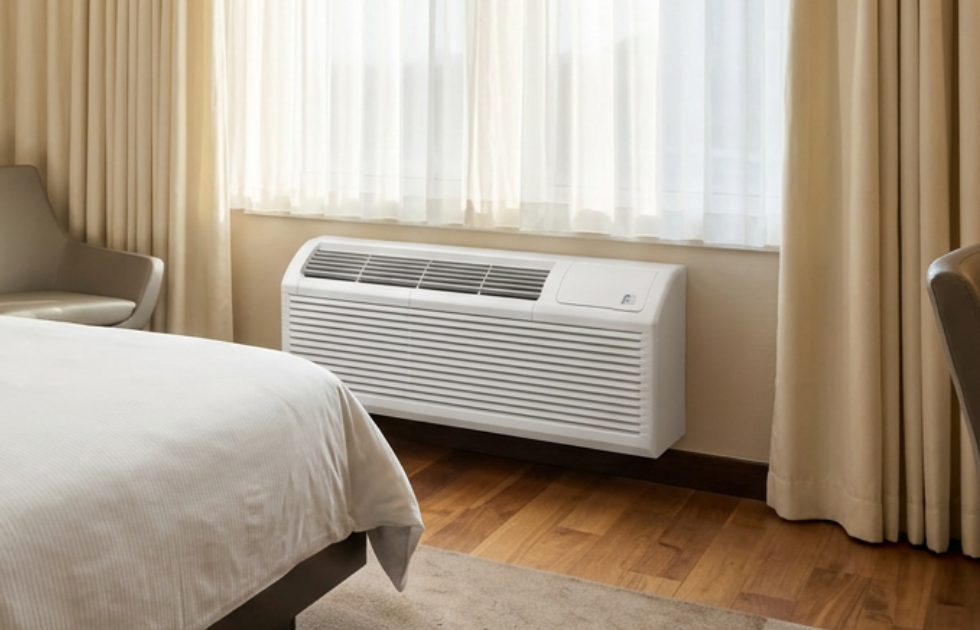
In high-occupancy buildings, PTAC units work hard.
Hotels, apartments, senior living facilities, student housing, and other multi-unit properties rely on these systems to keep individual rooms comfortable without tying every space to one central system.
That flexibility is useful. It also means each unit needs attention.
When PTAC maintenance gets pushed too far down the list, small issues can turn into guest complaints, tenant discomfort, higher energy use, and emergency service calls. Usually at the least convenient time. Naturally.
A regular service schedule helps property managers and maintenance teams keep units running reliably, spot problems early, and plan replacements before failures start piling up.
Quick Answer: How Often Should PTAC Units Be Serviced?
PTAC units in high-occupancy buildings should generally be serviced at least twice a year, usually before the cooling season and before the heating season.
In hotels, senior living facilities, student housing, and other properties with heavy daily use, quarterly checks may be a better fit.
Regular service helps keep filters clean, airflow strong, drainage clear, and heating and cooling performance consistent across rooms.
For property managers, the goal is simple: catch small problems before they become comfort complaints, emergency repairs, or replacement surprises.
Why High-Occupancy Buildings Need More Frequent PTAC Maintenance
High-occupancy buildings put more demand on PTAC units than a typical low-use space.
In hotels, units may run daily with different guests adjusting the temperature every few nights. In apartments, senior living communities, and student housing, PTACs often operate for long stretches during peak heating and cooling seasons.
That kind of use adds up.
More runtime means more dust in filters, more wear on components, and a greater chance of drainage or airflow issues. It also means a single underperforming unit can quickly turn into a tenant or guest complaint.
Regular maintenance helps keep performance consistent across the property and gives maintenance teams a better handle on which units are working well, which need attention, and which may be heading toward replacement.
Recommended PTAC Maintenance Schedule
A good PTAC maintenance schedule depends on occupancy, usage, and property type, but most high-occupancy buildings should plan on at least two service checks per year.
Here's a practical starting point:
| Service Timing | What to Do |
|---|---|
| Before Cooling Season | Clean filters, check coils, confirm cooling performance, inspect drainage, and test thermostat operation. |
| Mid-Summer Check | Inspect high-use units, address tenant or guest complaints, clean filters, and check for weak airflow or water issues. |
| Before Heating Season | Test heating operation, clean filters, inspect electrical components, and confirm safe performance. |
| Quarterly Checks for Heavy-Use Properties | Recommended for hotels, senior living, student housing, and units with frequent occupancy or complaints. |
For properties with heavy turnover or constant use, quarterly inspections can help prevent small problems from becoming larger maintenance issues.
The schedule does not need to be complicated. It just needs to be consistent.
What Should Be Checked During PTAC Service?
A PTAC service check should focus on the parts that affect comfort, airflow, drainage, and reliability.
For high-occupancy buildings, a basic PTAC maintenance checklist should include:
-
Clean or Replace Filters Dirty filters restrict airflow and make the unit work harder than it should.
-
Inspect the Coils Dust and buildup on coils can reduce heating and cooling performance.
-
Check Drainage Clogged or slow drains can lead to water leaks, moisture problems, and room complaints.
-
Test Heating and Cooling Operation Make sure the unit responds properly and reaches the expected temperature range.
-
Listen for Unusual Noise Rattling, buzzing, grinding, or louder-than-normal operation can signal worn parts.
-
Inspect the Wall Sleeve and Exterior Grille Blocked exterior airflow can reduce performance and cause the unit to struggle.
-
Review Complaint History Units with repeated complaints or service calls should be flagged for deeper inspection or possible replacement planning.
Good maintenance is not just about cleaning the unit. It is also about spotting patterns before they become expensive.
Signs a PTAC Unit Needs More Than Routine Service
Routine maintenance can solve a lot of small PTAC issues. But some problems point to a unit that may need repair, deeper inspection, or replacement planning.
Watch for these signs:
-
Repeated Tenant or Guest Complaints
If the same room keeps generating comfort complaints, the unit may have a deeper performance issue. -
Weak Heating or Cooling
A PTAC that runs but cannot maintain temperature may be losing efficiency or capacity. -
Water Leaks or Drainage Problems
Recurring leaks can point to clogged drains, improper slope, or internal issues that need attention. -
Loud or Unusual Operation
Grinding, rattling, buzzing, or vibration can signal worn components. -
Frequent Service Calls
If a unit needs attention over and over, maintenance may no longer be enough. -
Visible Wear or Corrosion
Rust, damaged coils, worn controls, or deteriorating parts can shorten the remaining life of the unit.
When these issues start showing up across multiple units, it may be time to look beyond routine service and start planning replacements.
When Maintenance Turns Into Replacement Planning
At some point, regular maintenance stops being enough.
If the same PTAC units keep showing up on service reports, generating complaints, or needing parts, it may be time to move them into a replacement plan.
This is especially important in high-occupancy buildings, where one failing unit can affect guest reviews, tenant satisfaction, and maintenance workload.
Replacement planning usually makes sense when:
-
Units Are Approaching 7–10 Years Old
Older PTAC units are more likely to lose efficiency and experience repeat issues. -
Repair Costs Keep Increasing
If service calls and parts are becoming frequent, replacement may be the more predictable expense. -
Performance Is Inconsistent Across Rooms
A mix of older and newer units can create uneven comfort and more complaints. -
Equipment Is No Longer Standardized
Different models, parts, and controls can make maintenance harder across the property. -
Peak Season Is Coming
Replacing problem units before heavy cooling or heating demand helps avoid emergency failures when comfort matters most.
A planned replacement cycle gives property managers more control over timing, budget, and tenant disruption. Waiting for units to fail one at a time usually does the opposite.
Keep PTAC Maintenance Ahead of the Complaints
In high-occupancy buildings, PTAC maintenance is not just about keeping equipment clean. It's about keeping rooms comfortable, reducing service calls, and avoiding avoidable disruptions.
A consistent service schedule, usually twice a year at minimum, helps maintenance teams catch small problems before they turn into bigger ones. For properties with heavy use, quarterly checks may be worth the extra attention.
And when certain units keep needing repairs, generating complaints, or falling behind in performance, that maintenance history becomes useful. It tells you when it may be time to start planning replacements.
At The HVAC Spot, we carry PTAC units for hotels, apartments, senior living facilities, student housing, and other multi-unit properties, with options that support planned replacement and bulk purchasing needs.
Explore PTAC solutions now so your property is ready before peak demand puts every unit to the test.
Explore PTAC Solutions