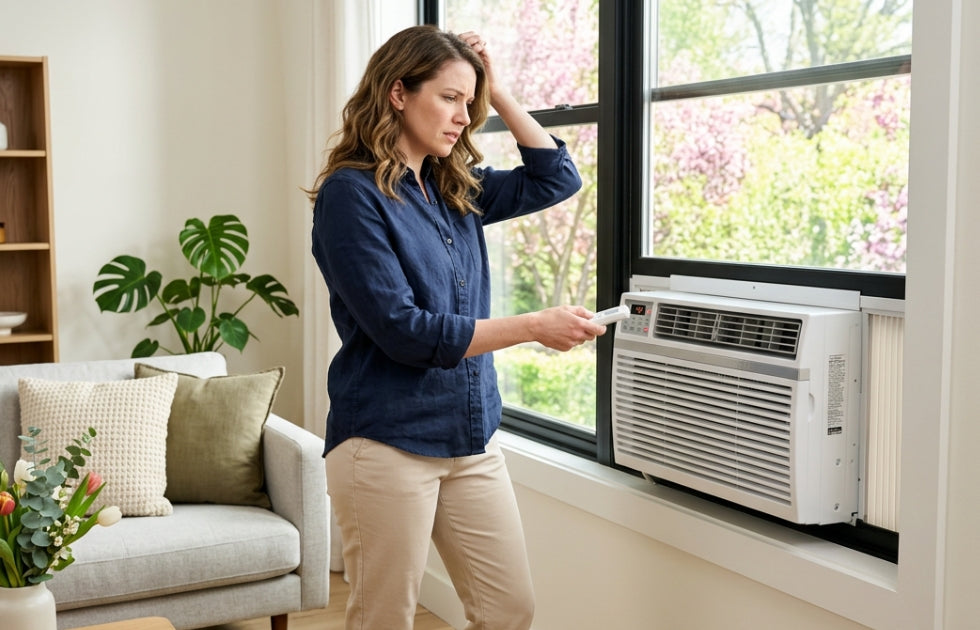
Imagine this: it’s the first warm day of the year. Your house feels stuffy, so you turn on the air conditioner for the first time since last summer.
And then it happens.
The unit starts up, but the air coming out isn’t cold. Maybe the airflow feels weak, or you hear a strange noise you don’t remember from last year.
Or even worse, it doesn’t start at all.
It’s a common springtime moment for homeowners. After sitting unused through the winter months, air conditioners can reveal small issues the first time they’re turned back on.
Sometimes the fix is simple, like cleaning a filter or adjusting a setting. In other cases, the problem may signal that the system is reaching the end of its life.
The good news is that most air conditioner problems show clear warning signs. Knowing what to look for can help you decide whether a quick fix will get things running again or whether it’s time to consider replacing the unit before summer heat arrives.
Why AC Problems Often Show Up in Spring
Air conditioner problems often show up in spring because the system hasn’t been used for several months. When it’s turned on again after winter, issues that developed during the off-season can suddenly become noticeable.
Dust and debris may have collected inside the unit, components may have worn down, or small problems from the previous cooling season may have gone unnoticed until the system starts running again.
Spring is often when homeowners first discover problems like warm air, weak airflow, unusual noises, or poor cooling performance.
The good news is that many of these issues have clear causes and solutions. In some cases a simple fix is all that’s needed. In others, the problem may signal that it’s time to consider replacing the unit before summer temperatures arrive.
1. Your AC Is Blowing Warm Air
Few things are more frustrating than turning on your air conditioner and feeling warm air coming from the vents.
In many cases, the cause is something simple. The thermostat may be set incorrectly, the air filter may be clogged, or the unit may need a basic cleaning after sitting unused during the winter.
Window air conditioners and portable AC units can also lose cooling performance if airflow is restricted or the filter hasn’t been cleaned. Mini-split systems can also blow warm air if the outdoor unit is blocked by debris or if the system hasn’t been maintained.
However, warm air can sometimes point to a larger issue, such as a failing compressor or a refrigerant problem. If the unit runs but never cools the room, it may be a sign that the system is reaching the end of its useful life.
For older or underperforming units, replacing the system with a newer and more efficient model can often provide better cooling and lower energy use.
2. Weak Airflow from the Unit
If your air conditioner is running but only a small amount of air is coming out, the problem may be restricted airflow.
One of the most common causes is a dirty or clogged filter. When filters fill with dust and debris, they block air from moving through the system properly. Cleaning or replacing the filter often restores normal airflow. This applies to window units, portable ACs, and mini-split indoor units alike.
In some cases, weak airflow can indicate that the fan motor is wearing out or that internal components are struggling to move air effectively. If airflow remains weak even after cleaning the unit, it may be a sign that the system is starting to fail.
3. Your AC Runs Constantly but Doesn’t Cool Well
Sometimes an air conditioner seems to run nonstop but still struggles to cool the room.
This can happen when the unit is too small for the space, when the filter is clogged, or when the system is working harder than expected to remove both heat and humidity from the air.
For window air conditioners and portable AC units, this often occurs when the room receives a lot of direct sunlight, the space is larger than the unit was designed to handle, or warm air is entering through doors and windows.
Mini-split systems can also run for long periods if the room has a high heat load from sunlight, appliances, or poor insulation. Because many mini-splits use inverter compressors, they may run continuously at lower power levels to maintain a steady temperature.
However, if the system used to cool the room effectively but now runs constantly without keeping up, it may be a sign that the unit is losing efficiency or nearing the end of its lifespan.
In those cases, upgrading to a properly sized and more efficient system can often restore consistent cooling and reduce energy use.
4. Strange Noises from the Unit
Air conditioners usually make some noise when they start up, but loud or unusual sounds often signal that something isn’t working properly.
A rattling or vibrating sound from a window or portable AC unit can sometimes mean that a panel is loose or that debris has collected inside the unit. Cleaning the unit and tightening mounting hardware can often solve the problem.
A buzzing noise may indicate an electrical issue or a problem with the fan motor.
Mini-split systems are generally very quiet, so noticeable noises from the indoor or outdoor unit may signal a maintenance issue. Debris around the outdoor condenser, loose components, or a worn fan motor can sometimes create new sounds during operation.
If an air conditioner suddenly becomes much louder than usual, it’s usually worth checking the unit early before the problem becomes more serious.
5. Musty or Burning Smells from the Unit
Unusual odors coming from an air conditioner are another sign that something may need attention.
A musty smell is often caused by moisture buildup inside the unit. Mold or mildew can develop when dust and condensation collect on internal components, especially after the system has been sitting unused during the winter.
This can happen in window air conditioners, portable units, and mini-split indoor units if filters or internal coils haven’t been cleaned.
Cleaning the filter and ensuring proper airflow can sometimes resolve minor odor issues. If strong smells continue, the unit may need deeper cleaning or inspection.
A burning smell, on the other hand, may indicate an electrical issue or overheating components.
Dust burning off when the unit first starts up in the season can sometimes cause a brief odor, but persistent burning smells should not be ignored.
6. Water Leaking Around the Unit
A small amount of moisture around an air conditioner isn’t always a problem. In fact, condensation is a normal part of the cooling process.
As warm air passes over the cooling coils, moisture in the air condenses and collects inside the unit before draining away.
However, visible water leaks or puddles can signal that something isn’t draining properly.
For window air conditioners, leaks can happen if the unit isn’t tilted slightly outward toward the window. This angle helps condensation drain outside instead of back into the room.
With portable air conditioners, water may collect in an internal reservoir. Many models require the tank to be emptied periodically, especially during humid weather.
Mini-split systems use a condensate drain line to carry moisture away from the indoor unit. If that line becomes blocked, water may begin dripping from the indoor unit.
In many cases, clearing a drain line or adjusting the unit’s position can solve the issue. But persistent leaks can sometimes indicate a drainage or internal component problem that needs attention.
7. Your Air Conditioner Is More Than 10-15 Years Old
Age is one of the biggest indicators that an air conditioner may be nearing the end of its useful life.
Many window air conditioners and portable AC units are designed to last around 8–12 years with normal use. Mini-split systems can often last longer, sometimes 15 years or more, especially when they are properly maintained.
As systems get older, efficiency tends to decline. Components wear down, cooling performance may drop, and repairs can become more frequent.
If you find yourself calling for repairs every season or replacing parts more often, the cost of keeping the unit running can start to add up. At that point, replacing the system may be more practical than continuing to invest in an aging unit.
Newer air conditioners are typically more energy efficient, quieter, and better at maintaining consistent comfort, which can make an upgrade worthwhile for many homeowners.
When It’s Time to Replace Instead of Repair
Some air conditioner problems can be fixed with a quick repair. Cleaning a filter, clearing a drain line, or tightening a loose component can often restore normal operation.
But in some situations, replacing the unit is the more practical long-term solution.
It may be time to consider replacing your air conditioner if:
- The system is more than 10–15 years old
- Repairs are becoming frequent or expensive
- The unit struggles to cool the space even after maintenance
- Energy bills continue to rise while performance declines
- The unit is unusually loud or unreliable
Upgrading to a newer air conditioner can often improve comfort while reducing energy use. Modern window units, portable ACs, and ductless mini-split systems are typically quieter, more efficient, and better at maintaining consistent temperatures than older models.
Planning an upgrade before peak summer heat arrives can also help avoid the frustration of dealing with a failed system during the hottest weeks of the year.
Don’t Wait for the First Heat Wave
Air conditioner problems have a way of showing up at the worst possible time—usually when the first real heat of the season arrives.
Catching these warning signs early can help you avoid the frustration of a system that suddenly stops working when you need it most.
In some cases, a simple fix may be all that’s needed to get your air conditioner running again. But if your unit is older, struggling to keep up, or requiring frequent repairs, upgrading to a newer system can often provide more reliable comfort and better energy efficiency.
At The HVAC Spot, we carry a full range of cooling solutions, including window air conditioners, portable AC units, and DIY mini-split systems, along with the accessories needed to get everything installed and running smoothly.
Explore your options now so your home is ready before summer temperatures arrive.